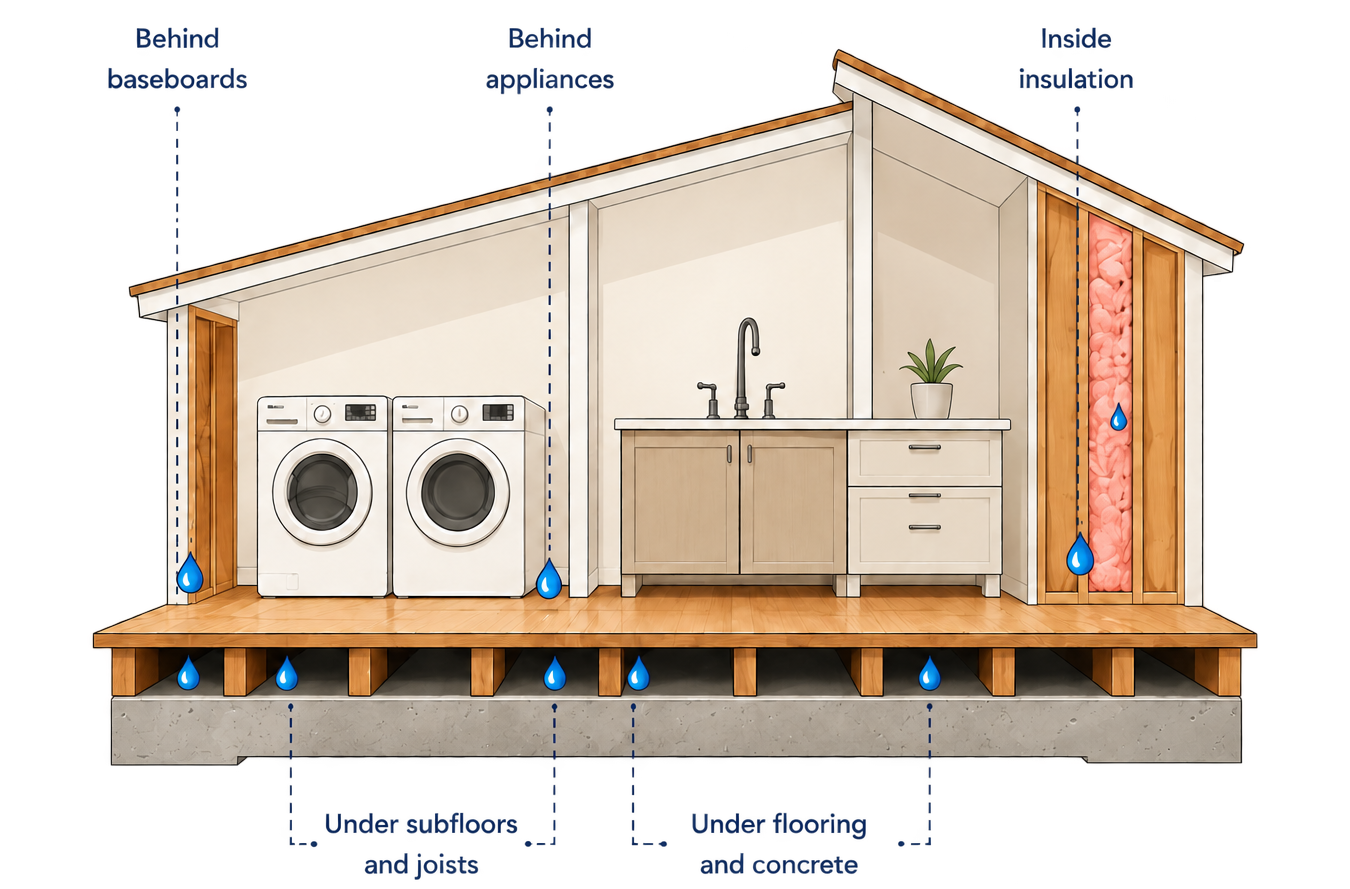

Water can travel under flooring, behind baseboards, and into nearby rooms. We trace the moisture and explain what can be dried, what may need removal, and why.
You don’t need to know where the water started before you call.
Do not touch wet electrical equipment or enter standing water around outlets or cords.
A reachable fixture valve or main shutoff may reduce additional damage.

We will tell you what to do and get our emergency team out if necessary.

Water rarely stays where you can see it. We use visual inspection, moisture meters, and infrared imaging to help understand the affected area.
We locate moisture movement beyond what you can see.

We identify materials that can be dried safely and effectively.

We explain what cannot be dried and why.

We give clear next steps so you can move forward.
You do not need to diagnose it before you call.


Water can move far from where it started. It can hide behind walls, under flooring, and inside cabinets.
We find where the water went using moisture meters and infrared imaging, then map the affected materials.
We extract visible water and dry wet surfaces to stop further damage.
When removal is needed, we explain why. We set the right equipment and monitor moisture daily to confirm progress.
Damaged materials are replaced and the property returned to a usable condition.

A water problem can become a moisture problem long after the puddle is gone. That doesn't mean every water loss automatically needs mold remediation. If we find conditions that warrant additional evaluation, we'll explain why.

Monsoon storms, flash flooding, old pipes, hard water and extreme heat all play a role. We live here too. We know the challenges Tucson homes and businesses face.

Yes. The initial inspection is free. We review what happened, check accessible affected areas, and explain what we can confirm, what remains unknown, and what we recommend next. If emergency extraction, testing, or another paid service is appropriate, we explain the cost before you authorize anything.
No. A small, contained spill on a nonporous surface may not require professional equipment. Equipment becomes more useful when water has entered drywall, flooring, cabinets, insulation, or other porous materials – or traveled beyond what you can see. We measure first and recommend equipment only when it serves a clear purpose.
No. Drywall can sometimes be dried in place when the water source is clean, the material remains intact, and the wall cavity can be dried safely. Removal may be appropriate when drywall is swollen, damaged, contaminated, trapping wet insulation, or unlikely to dry properly. We inspect first and explain why removal is or is not recommended.
No. A water loss can create conditions that support mold growth, but mold and mold remediation are not automatic. The water source, affected materials, amount of moisture, and how long things remain damp all matter. Prompt, verified drying reduces the risk. If we find conditions that warrant further evaluation, we explain what we found and why.
Not every toilet-related leak is the same. Water from a clean supply line differs from water that overflowed from a toilet bowl, drain, sewage backup, or outdoor flooding. Treat those sources as potentially contaminated: avoid contact, keep children and pets away, and do not aim household fans across the area. Call us and tell us where the water came from so we can explain the safest next step.